
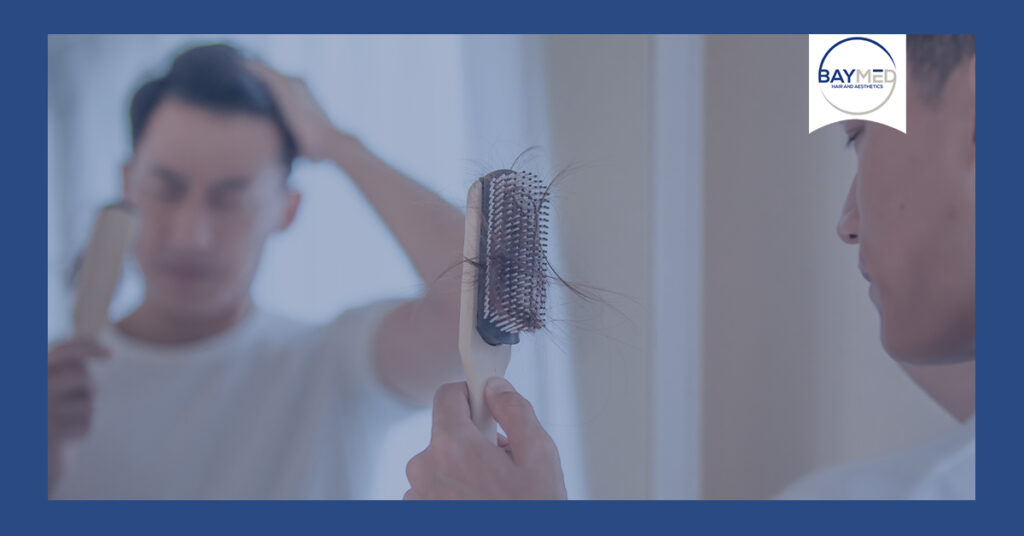
Finding hair on your pillow, in the shower drain or on your brush can be unsettling. But some shedding is a completely normal part of how hair grows. The real question is how much is normal, and when it is a sign of something more.
Here is what normal hair shedding looks like, the signs that shedding has become excessive and when it is time to see a specialist.
Table of Contents
How Much Hair Shedding Is Normal?
According to the American Academy of Dermatology, it is normal to shed between 50 and 100 hairs a day. People with longer or thicker hair may notice it more, simply because each strand is more visible.
You may also see more hair on wash days, especially if you only wash a few times a week. Hairs that have already detached collect between washes and come out all at once.
Rather than counting individual hairs, pay attention to changes. If you suddenly shed much more than usual, or your hair starts to look thinner, that is worth noting.
Why Hair Sheds: The Hair Growth Cycle
Every hair on your head goes through a cycle:
- Growth (anagen): Most of your hair, about 85 to 90 percent, is actively growing at any given time. This phase lasts several years.
- Transition (catagen): A short phase of a few weeks when growth stops.
- Resting and shedding (telogen): The hair rests for about three months, then falls out to make room for a new hair.
Because each follicle runs on its own schedule, you lose a small number of hairs every day while the rest keep growing. That is normal shedding.
What Causes Excessive Shedding?
When something pushes many hairs into the resting phase at the same time, you may notice a sudden increase in shedding a few months later. This is called telogen effluvium. Common triggers include:
- Childbirth, often called post-partum hair loss
- Illness or a high fever
- Surgery
- Rapid weight loss or strict dieting
- Significant emotional stress
- Starting or stopping certain medications, including hormonal birth control
- Low iron, thyroid problems or other nutritional and hormonal imbalances
Telogen effluvium usually starts two to three months after the trigger and often settles within about six months once the cause is resolved.
Shedding vs. Hair Loss: What Is the Difference?
Shedding and hair loss are not the same thing. With shedding, hair falls out but the follicle keeps working, so new hair grows back. With hair loss, such as androgenetic alopecia, the follicles shrink and new hairs grow back thinner or not at all.
Shedding usually happens evenly across the scalp. Hair loss often follows a pattern, such as a receding hairline, thinning at the crown or a widening part.
Signs Your Shedding Is Not Normal
- Noticeably more hair than usual on your pillow, brush or in the drain for several weeks
- A thinner ponytail or a wider part
- More visible scalp in bright light
- A receding hairline or thinning at the crown
- Round, smooth bald patches
- Shedding along with redness, itching, pain or scaling on the scalp
Here are more early signs of hair loss to watch for.
When Should You See a Specialist?
See a hair loss specialist if:
- Heavy shedding lasts longer than three months
- You notice patches, a receding hairline or a widening part
- Your scalp is red, itchy, painful or scaly
- You have other symptoms, such as fatigue or unexplained weight changes
A specialist can tell the difference between temporary shedding and true hair loss and identify any underlying cause. The earlier you start treatment, the more hair you are likely to keep.
Why Choose BayMed Hair & Aesthetics?
At BayMed Hair & Aesthetics in St. Petersburg, FL, Dr. Stavros Papandreou and our team help patients figure out whether they are dealing with normal shedding, temporary hair loss or something that needs treatment. If your hair needs support, we offer options such as PRP hair restoration, exosome therapy and Nutrafol to strengthen hair and support healthy regrowth.
Frequently Asked Questions
Is it normal to lose more hair when washing?
Yes. Hairs that have already detached collect between washes and come out in the shower. The less often you wash, the more you will see at once.
Does shedding mean I am going bald?
Not necessarily. Most shedding is temporary and the hair grows back. Shedding combined with visible thinning in a pattern is more likely to be a sign of hair loss.
Can stress make my hair shed?
Yes. Significant stress can push hairs into the resting phase, leading to increased shedding about two to three months later.
Does hair shedding stop on its own?
Normal shedding never fully stops, because it is part of the hair cycle. Excessive shedding from a temporary trigger usually settles within a few months once the cause is addressed.
Summary
Shedding 50 to 100 hairs a day is normal and part of your hair’s natural growth cycle. Sudden or ongoing increases, visible thinning or patches can be a sign of something more and are worth having checked.
If you are worried about how much hair you are losing, book a consultation with BayMed Hair & Aesthetics in St. Petersburg.