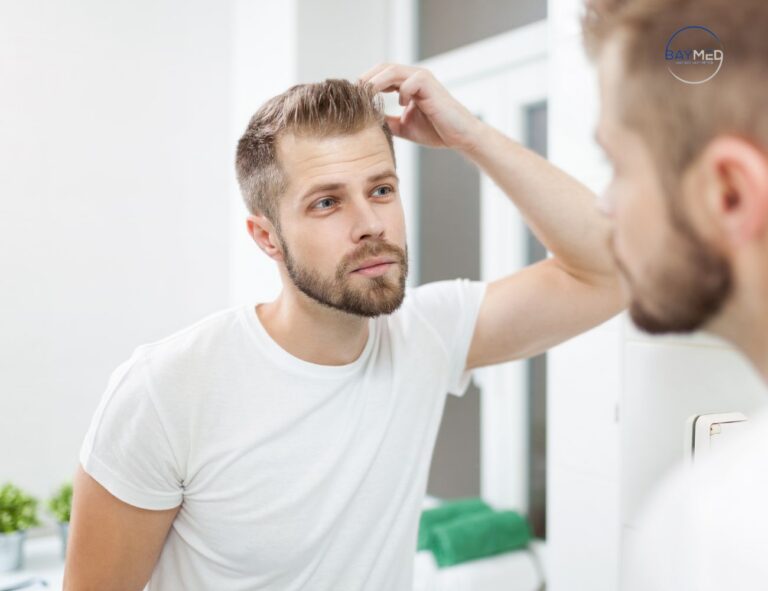
A glass of wine with dinner or a few drinks with friends is part of life for many people. But if you have started noticing more hair in your brush or a thinner ponytail, you may be wondering whether alcohol plays a role.
The short answer: for most people, alcohol does not directly cause hair loss. But regular or heavy drinking affects the systems your hair depends on, from hydration and nutrition to hormones and sleep. Over time, that can lead to more shedding and thinner, weaker hair.
Here is how alcohol and hair loss are connected, the signs to watch for, and what you can do to protect your hair.
Table of Contents
Can Alcohol Cause Hair Loss?
Drinking in moderation is unlikely to make your hair fall out on its own. The concern is excessive or long-term drinking. U.S. dietary guidelines define moderate drinking as up to two drinks a day for men and one drink a day for women, according to the CDC.
Hair follicles are some of the fastest-growing cells in the body. They need a steady supply of water, protein, vitamins and minerals to keep producing strong hair. When heavy drinking disrupts that supply, more follicles can leave the growth phase early and move into a resting phase. Resting hairs eventually shed, and the hair that grows back may be finer or slower to return.
How Alcohol Affects Your Hair
Alcohol does not attack hair follicles directly. Instead, it affects your hair through its impact on the rest of your body.
Dehydration
Alcohol is a diuretic. It suppresses the hormone that helps your body hold on to water, which is why you need the restroom more often when you drink, as Healthline explains. Frequent dehydration leaves your skin and scalp dry, and hair can become brittle and more likely to break. Learn more about how drinking water supports hair growth.
Nutrient Deficiencies
Heavy drinking makes it harder for your body to absorb and store key nutrients, including zinc, iron, folate and other B vitamins. It can also replace nourishing meals with empty calories. Low iron and zinc are well-known contributors to hair shedding, and protein is the building block of every hair strand. Without enough of these nutrients, your body puts hair growth at the bottom of its priority list.
Hormonal Changes
Alcohol can disrupt the balance of sex hormones such as testosterone and estrogen and raise cortisol, the body’s main stress hormone. These shifts can increase shedding, especially in people who are already prone to male or female pattern hair loss.
Poor Sleep and Stress
A nightcap may help you fall asleep, but alcohol disrupts deep, restorative sleep later in the night. Poor sleep and ongoing stress are common triggers of telogen effluvium, a type of temporary hair shedding that often appears two to three months after a period of stress on the body. Read more about the link between stress and hair loss.
Liver Health
Your liver processes nutrients and helps regulate hormones. Long-term heavy drinking can damage the liver, and advanced liver disease can lead to hair thinning along with many other health problems.
Does Alcohol Cause Alopecia Areata?
Alopecia areata is an autoimmune condition that causes round, patchy hair loss. There is no clear evidence that alcohol causes it. A 2022 review of lifestyle factors in alopecia areata, published through the National Institutes of Health, even noted research suggesting light drinking may be linked to a lower risk.
That is not a reason to drink, though. Heavy drinking and binge drinking strain the immune system and can make existing skin and scalp conditions worse.
Signs Alcohol May Be Affecting Your Hair
- More hair than usual in the shower or on your brush, especially a few months after a period of heavy drinking
- Overall thinning across the scalp rather than one bald patch
- Dry, brittle hair that breaks easily
- A dry, tight or flaky scalp
- Hair that seems to grow back more slowly
These signs overlap with other causes of hair loss, such as genetics, thyroid problems and stress, so it is worth having them checked. Here are other early signs of hair loss you should not ignore.
Is Alcohol-Related Hair Loss Reversible?
In many cases, yes. When shedding is caused by dehydration, nutrient gaps or stress on the body, hair often recovers once the cause is addressed. Because hair grows in cycles, it usually takes about three to six months to see shedding slow down and new growth come in.
If drinking has sped up genetic hair loss, such as male or female pattern hair loss, cutting back will help but will not reverse it on its own. That is where professional treatment can make a real difference.
How to Protect Your Hair If You Drink
- Drink in moderation. Stay within the recommended limits and avoid binge drinking.
- Stay hydrated. Alternate alcoholic drinks with water and have a glass before bed.
- Eat for your hair. Choose protein-rich meals and foods high in iron, zinc and B vitamins.
- Check your levels. If you notice shedding, ask your doctor about testing iron, vitamin D and thyroid function. These are common, treatable causes of thinning.
- Protect your sleep. Avoid drinking close to bedtime and keep a regular sleep schedule.
- Support hair from within. Supplements such as Nutrafol are designed to support hair growth by targeting stress, hormones and nutrition.
Why Choose BayMed Hair & Aesthetics?
At BayMed Hair & Aesthetics in St. Petersburg, FL, we look at the whole picture before recommending treatment, including lifestyle factors like alcohol, diet, stress and sleep. Our team, led by Dr. Stavros Papandreou, uses tools such as genetic testing for hair loss to understand what is driving your thinning, then builds a plan around you.
Depending on your needs, that plan may include PRP hair restoration, exosome therapy, Juvasonic combination therapy or nutritional support, alongside simple lifestyle changes.
Frequently Asked Questions
Does quitting alcohol help hair grow back?
If alcohol was contributing to your shedding, cutting back or stopping often helps. Most people notice less shedding within a few months as hydration, nutrition and sleep improve.
Can one night of heavy drinking cause hair loss?
It is unlikely. Hair shedding linked to alcohol usually comes from repeated or long-term drinking, not a single night out.
Is beer or wine better for your hair?
How much and how often you drink matters more than what you drink. Sugary mixed drinks add extra sugar on top of the alcohol, which is not ideal for your overall health.
When should I see a specialist?
If shedding lasts longer than a few months, or you notice bald patches or a receding hairline, book a hair loss consultation to find the cause and the right treatment.
Summary
For most people, alcohol is not a direct cause of hair loss. But heavy or regular drinking can dehydrate you, drain key nutrients, disrupt hormones and sleep, and push more hairs into the shedding phase. The good news is that this type of hair loss is often reversible once the cause is addressed.
If you are noticing thinning, book a consultation with BayMed Hair & Aesthetics in St. Petersburg to find out what is really behind it and how to treat it.