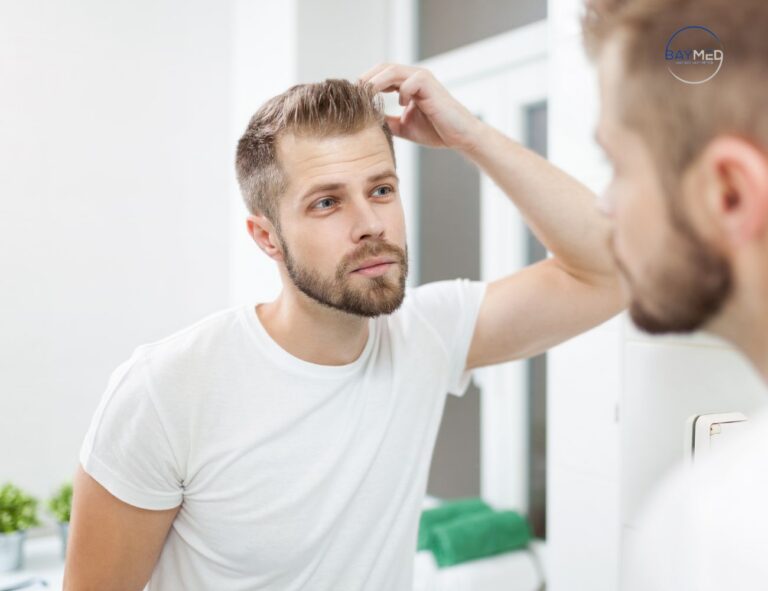

There are some things about the human body that everyone assumes we all know about… but are never actually taught. One of them is the anatomy of the scalp.
The reality is that most of only know about the scalp from shampoo commercials. It’s not something we cover in basic health or biology classes, and a lot of people probably don’t even really know what makes your scalp different from the rest of your skin.
That’s okay, we’re here to help.
What exactly is the Scalp?
Medically speaking, the scalp is more than just the skin on your head. It includes the skin from your face to your neck and roughly from your ear to your other ear – but that’s only one-fifth of what qualifies as scalp.
According to the National Institutes of Health, our scalp includes “the skin, connective tissue layer, galea aponeurotica, loose areolar connective tissue, and the pericranium.” So, chances are those dandruff shampoo commercials talking about an itching scalp don’t really know what they are talking about either.
That the scalp is made up of more than just a layer of skin is important though. It helps us understand better how the anatomy of the scalp impacts our hair.
How Do I Know My Scalp Type?
When haircare specialists talk about scalp type, what they are really referring to is the way that the oil glands in your scalp behave. In some people, the sebum – the natural oil your body produces to protect your skin – seems excessive and their hair appears oily. For people whose scalp doesn’t produce enough sebum, their scalp can seem tight and itchy if they wash their hair too often.
The best way to determine what type of scalp you have is to note how it (and your hair) feels after a wash. If it feels almost uncomfortably tight after a wash, you likely have dry scalp.
How Is Hair Attached to the Scalp?
Hair starts out at the root and is surrounded by the hair follicle, which are primarily in the skin layer of the scalp. However, the follicle can extend into the connective tissue layer of the scalp where the nerves and vascular system reach the hair.
The hair on our head is essentially the same as most “terminal” hair on our bodies. Other places with terminal hair include eyebrows, under arms, pubic hair, and eyelashes.
Most of the rest of the body (except the soles of our feet and palms of our hands) are covered with vellus hair… the stuff we often think of as peach fuzz. The National Institutes of Health suggests that most women have about 30% of their bodies covered in terminal hair while in most men that percentage is closed to 90%.
How Can You Tell If Hair Is Growing?
The best way to encourage hair growth is to avoid damaging your hair follicles. According to the Cleveland Clinic, repeated pulling out of hair or even too much stress can cause damage to the hair follicle.
But if your hair follicles are healthy, one way to tell that your hair is growing is to part your hair and look for dark spots along the scalp. This may indicate that new hair is growing but not yet long enough to actually feel. Fine short hairs along your scalp may also be an indicator of new hair growth.
But what if you don’t see these indicators of new hair growth? Or if you fear that you have damaged your follicles?
BayMed Hair and Aesthetics Are the Hair Growth Experts
At BayMed, our staff understands that how your hair looks and feels is important to you. And we can help you figure out if your hair loss concerns are valid. When you come to see our doctors, they will help you understand how your scalp health affects your hair growth. Don’t let stress cause you to lose even more hair. Call us today to find out what your scalp needs.